
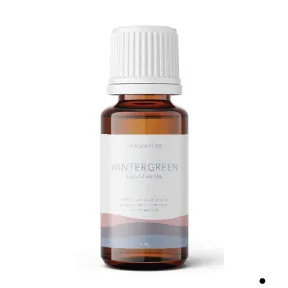




FEATURES AND BENEFITS
- Distinctive Wintergreen Fragrance: Delivers a recognizable sweet, mint-like aroma with herbal and woody undertones.
- Strong Aromatic Character: Its concentrated fragrance provides a prominent wintergreen note in aromatic compositions.
- Naturally Occurring Methyl Salicylate: Contains approximately 99% methyl salicylate, the compound responsible for much of wintergreen's characteristic fragrance.
- Botanical Origin: Derived from the leaves of Gaultheria procumbens, an aromatic evergreen plant.
- Steam-Distilled Ingredient: Produced through steam distillation to recover the plant's volatile aromatic constituents.
- Fresh Fragrance Profile: Offers a distinctive alternative to conventional peppermint and spearmint fragrances.
- Sweet Herbal Character: Combines mint-like sweetness with woody and medicinal-smelling notes.
- Recognizable Ingredient Identity: Wintergreen has a familiar aroma that consumers often associate with traditional wintergreen-scented products.
- Fragrance Development Interest: Its unusual aromatic profile makes it relevant to professional fragrance research and ingredient evaluation.
- Chinese Origin: Sourced from botanical material identified as originating in China.
- Strong Middle Note: Provides a prominent aromatic contribution within its fragrance classification.
- Botanical Ingredient Documentation: Its defined principal constituent makes batch-specific analytical verification especially important.
PRODUCT DESCRIPTION
Wintergreen Essential Oil is a concentrated aromatic botanical ingredient obtained from the leaves of Gaultheria procumbens, a member of the Ericaceae family.
Wintergreen is an evergreen plant recognized for its aromatic leaves and distinctive fragrance.
The essential oil is produced through steam distillation, which separates volatile aromatic compounds from the botanical material.
This particular variety originates from China.
Wintergreen Essential Oil is especially recognizable for its sweet, penetrating, mint-like aroma.
Although its fragrance resembles peppermint or spearmint in some respects, wintergreen has a different botanical identity and chemical composition.
Its distinctive fragrance is associated primarily with methyl salicylate.
The supplier identifies methyl salicylate as approximately 99% of this essential oil.
Methyl salicylate is an aromatic ester with a strong, characteristic wintergreen odour.
It is also a pharmacologically active substance, meaning that its concentration is relevant not only to fragrance performance but also to toxicological safety.
This makes Wintergreen Essential Oil significantly different from many other essential oils used in personal care products.
Although wintergreen has a history of traditional use, its presence in a product does not automatically establish cosmetic suitability or justify therapeutic claims.
For professional manufacturers, Wintergreen Essential Oil requires careful ingredient identification, safety documentation, and regulatory assessment before any proposed application.
Its distinctive fragrance makes it an interesting botanical material, but its high methyl salicylate content limits its suitability for general consumer experimentation.
WHY PEOPLE RECOGNIZE WINTERGREEN ESSENTIAL OIL
Wintergreen has a distinctive aromatic identity that sets it apart from many other botanical oils.
Its recognizable characteristics include:
- Sweet, mint-like fragrance.
- Strong aromatic intensity.
- Subtle woody undertones.
- Characteristic wintergreen scent.
- Botanical evergreen origin.
- Steam-distilled production.
- Naturally occurring methyl salicylate.
- Clear to pale-yellow appearance.
- Strong middle-note fragrance classification.
- Distinctive character compared with peppermint.
- Distinctive character compared with spearmint.
- Historical association with wintergreen-scented products.
RECOMMENDED APPLICATIONS
- Professional Fragrance Evaluation
- Wintergreen Essential Oil may be assessed by qualified professionals for its aromatic characteristics.
- Any proposed use requires a review of methyl salicylate exposure, applicable ingredient restrictions, and finished-product safety.
- Cosmetic Product Development
- Wintergreen is not recommended as a general-purpose cosmetic fragrance ingredient without a qualified toxicological and regulatory assessment.
- Its high methyl salicylate content requires particular attention in products involving skin contact.
- Hair & Scalp Care
- The characteristic wintergreen fragrance may be of interest during professional ingredient research.
- However, its presence does not establish benefits for hair growth, scalp health, or hair conditioning.
- Suitability for haircare applications must be independently established.
- Professional Spa Products
- Wintergreen has a recognizable fragrance associated with some traditional aromatic products.
- However, concentrated wintergreen oil should not be casually incorporated into massage oils, spa preparations, or other skin-contact products.
- Soap & Cleansing Products
- Any proposed use in cosmetic cleansing products requires an appropriate safety evaluation and review of applicable restrictions.
- Natural Perfumery
- Wintergreen's strong aromatic character may be relevant to professional fragrance analysis.
- The use of methyl-salicylate-rich ingredients must comply with applicable fragrance safety requirements.
- Home Fragrance
- Applications involving inhalation exposure require a separate assessment of the product's intended use and safety.
- Wintergreen Essential Oil should not be treated as interchangeable with ordinary mint fragrance oils.
DIRECTIONS & SUGGESTED USAGE
- Professional Use: Intended for qualified professional evaluation using current ingredient specifications and safety documentation.
- Cosmetic Manufacturing: Assess the finished product's regulatory classification, methyl salicylate concentration, exposure conditions, and applicable ingredient restrictions before considering use.
- Fragrance Development: Review the current IFRA documentation and toxicological information before determining whether a proposed application is appropriate.
- Consumer Use: Concentrated Wintergreen Essential Oil is not recommended for unsupervised DIY skincare, massage, bathing, or direct skin application.
- Important: Do not ingest or apply concentrated Wintergreen Essential Oil directly to the skin.
PRODUCT SPECIFICATION
- Product Name: Wintergreen Essential Oil (China)
- Botanical Name: Gaultheria procumbens
- Common Name: Wintergreen
- INCI: Gaultheria Procumbens Leaf Oil
- CAS Numbers: 90045-28-6 / 68917-75-9
- Country of Origin: China
- Plant Part Used: Leaves
- Extraction Method: Steam Distillation
- Product Type: Wintergreen Essential Oil
- Colour: Colourless to Pale Yellow
- Consistency: Clear Liquid
- Aromatic Description: Sweet, Mint-Like, Woody, Strong, Characteristic Wintergreen
- Aromatic Note: Middle Note
- Aroma Strength: Strong
- Fragrance Family: Mint-Like / Sweet / Herbal / Woody
- Principal Constituent: Methyl Salicylate — approximately 99%
- Water Solubility: Not established by the supplier's product listing.
- Shelf Life: Up to 2 years when stored appropriately.
- Organic Certification: Not established for this variety.
- Intended Applications: Qualified Professional Ingredient Evaluation and Appropriately Assessed Fragrance Development.
Natural variations in fragrance, appearance, and composition may occur between production batches. Refer to current batch documentation for exact specifications.
COMPLIANCE, REGULATORY & SAFETY CAUTIONS
Essential oils can be classified as either a cosmetic or a consumer product. Depending on the name and implied instructions ensure the correct regulatory compliance guide is used.
Regulatory
Marketed for hair or skin
Health Canada - Cosmetic Notification Required
Marketed for Diffuser, candles, cleaning
- Consumer product & labelling act applies
Filled in Accordance with GMP Guidelines
Our products are manufactured following Good Manufacturing Practices (GMP) and manufacturing procedures aligned with ISO 22716:2007 — Cosmetics: Good Manufacturing Practices.
- ISO 22716:2007 provides internationally recognized guidelines for the production, control, storage and shipment of cosmetic products. Cosmetic Labs Canada follows these principles as part of our commitment to product quality, consistency, traceability and responsible manufacturing.
SAFETY & LABEL CAUTION
Cosmetic Safety Caution
- For external use only.
- Keep out of reach of children.
- Apply only to intact skin. Avoid contact with eyes, mucous membranes, and damaged or broken skin.
- Discontinue use if irritation or sensitivity develops.
Consumer Product Caution
- For external use only. Keep out of reach of children.
- Apply only to intact skin. Avoid contact with eyes, mucous membranes, and damaged or broken skin.
- Discontinue use if irritation or sensitivity develops.
For Canadian cosmetic marketing: DO NOT USE unapproved therapeutic claims such as “reduces inflammation,” “relieves arthritis,” “heals bruises” or “treats muscle pain.” These could change the product's regulatory classification.
Caution: For external use only. Avoid broken or irritated skin. Arnica may cause sensitivity in some individuals, particularly those allergic to plants in the Asteraceae family.
STORAGE
- Store tightly sealed in a cool, dry location, away from direct sunlight and excessive heat.
- For optimal storage conditions, maintain temperatures below 25°C whenever practical.
- Protect the product from moisture and prolonged exposure to air. Appropriate packaging, including amber glass or compatible opaque containers, can help maintain product quality.